

Most small business owners know what a purchase order is in theory. Fewer use them consistently. And almost none realize how much money they lose by not having a proper PO process in place.
This guide explains what a purchase order actually is, why your business should use one, and how to set up a process that does not add unnecessary friction to your operations.
What Is a Purchase Order?
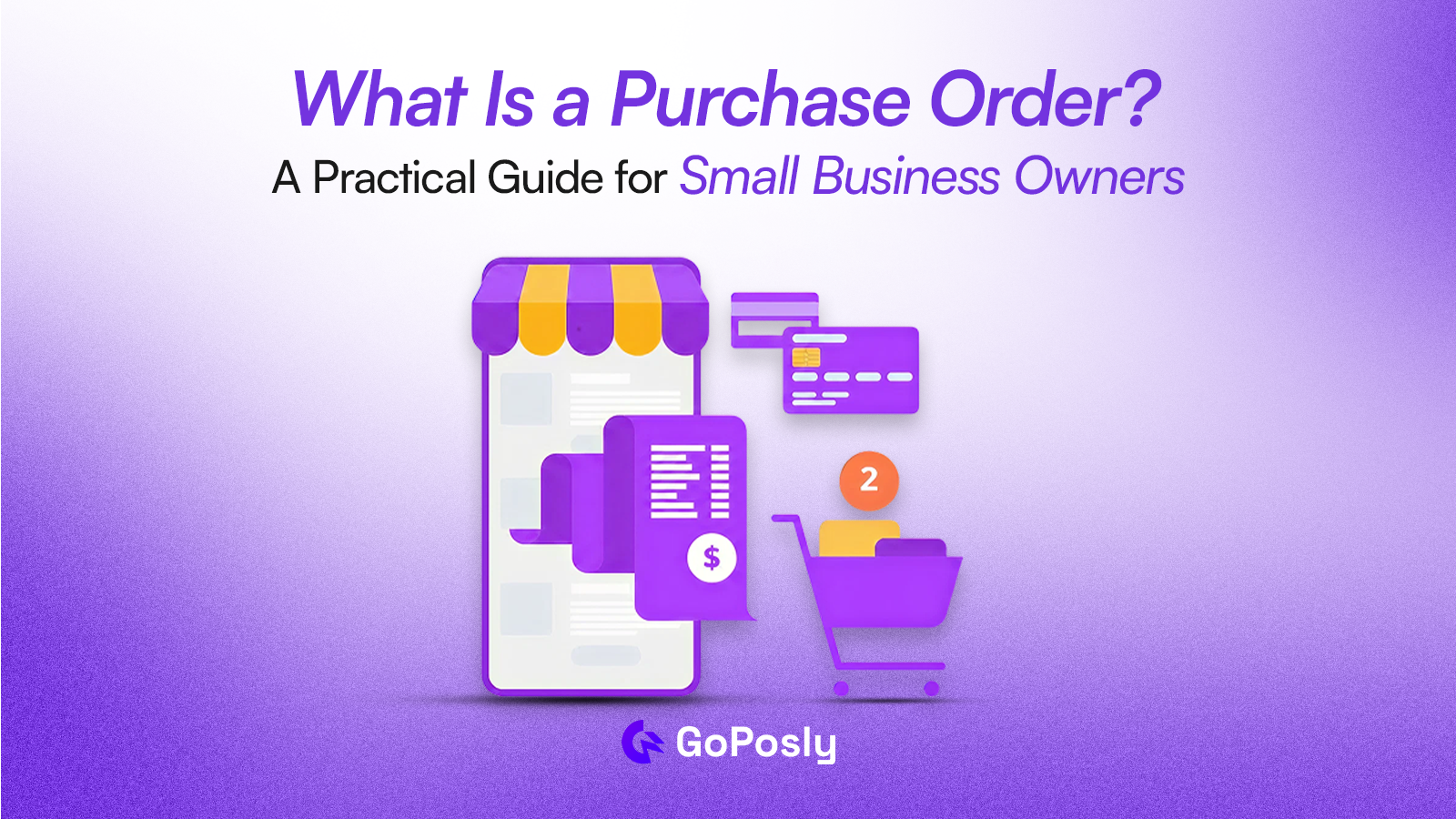
A purchase order (PO) is a formal document sent from a buyer to a supplier that authorizes a purchase. It specifies what products you are ordering, the quantity of each item, the agreed price per unit, the expected delivery date, the delivery address, and the payment terms.
Once a supplier accepts the PO, it becomes a binding agreement. You have agreed to buy; they have agreed to supply at the stated price and quantity.
Purchase Order vs. Invoice: What Is the Difference?
These two documents are frequently confused because they contain similar information. But they serve opposite purposes.
- A purchase order is created by the buyer, before goods are received. It is a request to buy.
- An invoice is created by the supplier, after goods are delivered. It is a request for payment.
In a well-run purchasing process, the supplier invoice should match the PO you sent them. When it does not — different quantities, different prices — that is a discrepancy you catch before payment, not after.
Why Small Businesses Should Use Purchase Orders
Many small business owners skip the PO step because it feels like unnecessary administration. They place orders by phone or chat and trust that everything will arrive correctly. This works — until it does not.
Supplier Disputes
If a supplier delivers 80 units instead of 100 and claims they only agreed to 80, you have no paper trail without a PO. A signed purchase order is your record of what was ordered at what price.
Price Creep
Suppliers sometimes invoice at a higher price than was verbally agreed, particularly when markets are volatile. A PO locks in the price at the time of ordering — it is a contract, not a courtesy document.
Unauthorized Spending
Without a PO process, any employee with a supplier relationship can place an order. Purchase orders create an approval layer — purchases only happen when someone with authority authorizes them.
Inventory Reconciliation
When goods arrive, your receiving team should check them against the original PO. This catches short deliveries, wrong items, and damaged goods immediately rather than weeks later when the invoice arrives and payment is already being processed.
What a Purchase Order Should Include
A purchase order does not need to be complex. At minimum it should include: a unique PO number for tracking, your business details and the supplier details, the order date and expected delivery date, line items with product name, SKU, quantity, unit price, and total, the grand total, payment terms, and an authorization signature or approval record.
You can create POs manually using a template, but as your order volume grows this becomes slow and error-prone. Most businesses eventually move to software that generates POs automatically from their product catalog and supplier profiles.
How Purchase Orders Fit Into Your Inventory Workflow
A PO is not a standalone document — it is part of a purchase-to-receive cycle that should connect directly to your inventory system:
- You identify that stock is running low via a low-stock alert or reorder report.
- You create a PO and send it to your supplier.
- The supplier confirms the order.
- Goods are delivered to your warehouse or shop.
- Your team receives the goods and checks them against the PO.
- The supplier sends an invoice.
- You match the invoice against the PO and approve payment only when they align.
When this cycle is managed in one connected system rather than across emails, chat threads, and separate spreadsheets, the whole process takes a fraction of the time and errors are caught automatically.
GoPosly handles this entire cycle: from raising a PO to receiving goods to matching the supplier invoice. Purchasing, inventory, and accounts work together in the same platform. See the plans and start free.
The Bottom Line
A purchase order is not bureaucracy — it is protection. It protects your cash, your inventory accuracy, and your supplier relationships. For any business placing regular orders with suppliers, a formal PO process pays for itself in the first dispute it prevents. Start with a simple template, and move to a connected system as your order volume grows.